The Stronghold Series • Bentley Inspirations
Fiction With Purpose Breaking Chains Beyond the Page
“Rescue those being led away to death; hold back those staggering toward slaughter.” — Proverbs 24:11
Scroll
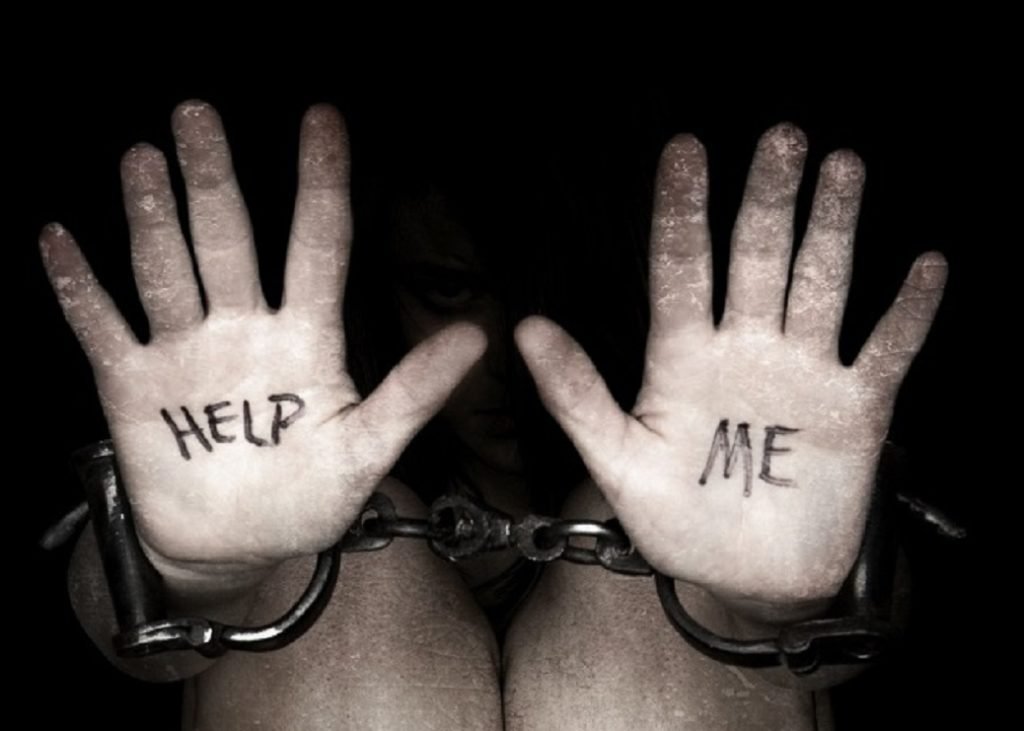
The Bentley family donates proceeds from the sales of the fiction books in The Stronghold Series and other materials on this site to organizations actively involved in the rescue, recovery, rehabilitation, and restoration of human trafficking victims.
If you have a heart for those who suffer from human trafficking and would like to learn more about this growing epidemic or the organizations we have chosen to support, please explore the links provided below.
Thank you for anything and everything you can do to help us support this cause and these organizations.
Funding undercover investigations, law enforcement partnerships, and tactical operations that bring trafficking victims to safety.
Supporting safe houses, trauma-informed counseling, medical care, and the critical first steps out of exploitation.
Long-term therapeutic programs, life skills training, and holistic healing that help survivors rebuild from the inside out.
Empowering survivors toward independence with education, job training, and a genuine path to a new life of freedom and dignity.
Community outreach, school programs, and missionary work that equips vulnerable populations to recognize and resist trafficking tactics.
In the fictional town of South Point, Texas, the characters of The Stronghold Series wage war against supernatural forces that profit from human suffering. The spiritual warfare depicted in these pages — the strongholds of darkness, the battles for liberation — is an allegory drawn from a very real crisis unfolding across the globe every single day.
At the heart of the series, a miraculous event transforms a community. The South Point Community Church is engulfed in flames before the watching world — yet emerges completely undamaged. From that international miracle, the citizens of South Point receive a prophecy — a promise of revival, of rebuilding, of purpose revealed. Out of that promise rises the Trinity of Hope, a facility whose blueprints seemed impossibly large until the truth came to light: ledgers, delivered at an unthinkable cost. A woman named Lupe laid down her life so that four young women could make it to freedom and ensure the records she had kept for years reached the hands of the church. Those ledgers exposed the staggering scale of trafficking hidden in plain sight. The question was no longer why so big? — it was how could it be big enough? An elite team is forged from that revelation, men and women whose mission becomes the rescue, recovery, rehabilitation, and restoration of the trafficked and the broken.
Author Eric N. Bentley's own missionary experience in Trinidad and Tobago opened his eyes to the devastating reach of trafficking networks. That encounter became the heartbeat of this series and the fuel behind its philanthropic mission.
These stories are my weapon. If I can write a book that grips someone by the heart and then opens their eyes to what's happening in the real world — that's a chain broken. That's a stronghold torn down.
— Eric N. Bentley, AuthorSource: Federal Bureau of Investigation (FBI)
Human trafficking, believed to be the third-largest criminal activity in the world, is a form of human slavery which must be addressed at the interagency level. Human trafficking includes forced labor, domestic servitude, and commercial sex trafficking. It involves both U.S. citizens and foreigners alike, and has no demographic restrictions.
The FBI works human trafficking cases under both its Civil Rights program and its Violent Crimes Against Children program. The majority of human trafficking victims in our cases are U.S. citizens, and we take a victim-centered approach in investigating such cases, which means that ensuring the needs of the victims take precedence over all other considerations.
Here in this country, people are being bought, sold, and smuggled like modern-day slaves, often beaten, starved, and forced to work as prostitutes or to take jobs as migrant, domestic, restaurant, or factory workers with little or no pay.
Over the past decade, human trafficking has been identified as a heinous crime which exploits the most vulnerable in society. Among the Civil Rights Unit's priorities is its human trafficking program, based on the passage of the 13th Amendment to the U.S. Constitution, which provided that "neither slavery nor involuntary servitude, except as a punishment for crime whereof the party shall have been duly convicted, shall exist within the United States."
Under the human trafficking program, the Bureau investigates matters where a person was induced to engage in commercial sex acts through force, fraud, or coercion, or to perform any labor or service through force, coercion, or threat of law or legal process. Typically, human trafficking cases fall under the following investigative areas:
When persons are compelled to engage in commercial sex acts through means of force, fraud, and/or coercion.
When foreign nationals, both adult and juveniles, are compelled to engage in commercial sex acts with a nexus to the United States through force, fraud, and/or coercion.
When persons, domestic or foreign nationals, are compelled to work in some service or industry through force or coercion.
When persons, domestic or foreign nationals, are compelled to engage in domestic work for families or households, through means of force or coercion.
The most effective way to investigate human trafficking is through a collaborative, multi-agency approach with our federal, state, local, and tribal partners. In concert with this concept, FBI investigators participate or lead task forces and working groups in every state within the U.S.
ACTeam is a multi-agency initiative aimed at building human trafficking enforcement efforts and enhancing access to specialized human trafficking subject matter experts, leads, and intelligence. Each ACTeam develops and implements a strategic action plan, which leads to high-impact federal investigations and prosecutions. The federal agencies involved in the ACTeam initiative are the Department of Justice, Federal Bureau of Investigation, Department of Homeland Security, and Department of Labor.
A multi-agency task force initiative funded through the Office for Victims of Crime (OVC) and Bureau of Justice Assistance (BJA). These multidisciplinary task forces include members from the U.S. Attorney's office, local prosecutor's office, federal law enforcement, state/local law enforcement, and a community service provider, with the goal of proactively identifying and recovering victims of human trafficking.
The Bureau's Human Trafficking program has established FBI-funded human trafficking task forces in multiple field offices, with the purpose of working with state and local law enforcement agencies in combating human trafficking through proactive and collaborative practices. The ultimate goal of these task forces is to recover victims and investigate traffickers at the state and federal level.
As a result of the 2000 Trafficking Victims Protection Act (TVPA), law enforcement was given the ability to protect international victims of human trafficking through several forms of immigration relief, including Continued Presence and the T visa. Continued Presence allows law enforcement officers to request temporary legal status in the U.S. for a foreign national whose presence is necessary for the continued success of a human trafficking investigation. The T visa allows foreign victims of human trafficking to become temporary U.S. residents, through which they may become eligible for permanent residency after three years.
The TVPA also established a law requiring defendants of human trafficking investigations to pay restitution to the victims they exploited. The TVPA, passed to create the first comprehensive federal law to address human trafficking, provided a three-pronged approach to addressing trafficking: protection through immigration relief for foreign national victims, prevention through public awareness programs both domestically and abroad, and prosecution through new federal criminal statutes.
FBI human trafficking investigations are conducted by agents within the human trafficking program and members of our federal human trafficking task forces, and every one of our 56 field offices has worked investigations pertaining to human trafficking. Often, investigations involving human trafficking come to the attention of field offices and task forces through:
During the stages of a human trafficking investigation, the primary goal of investigators is the recovery of victims in order to remove them from an environment of violence and exploitation. Program representatives work in unison with victim advocates and NGOs, who are able to provide victims of human trafficking with the short-term resources (shelter, food, clothing) and long-term resources (counseling, education assistance, job training) they require during the road to recovery.
After recovering a victim of human trafficking, field offices are then able to conduct logical, efficient, and effective investigations which lead to the eventual arrest and successful prosecution of their traffickers, as well as the potential recovery of additional victims and identification of other traffickers.
Over the past decade, the FBI's human trafficking investigations have been responsible for the arrest of more than 2,000 traffickers and the recovery of numerous victims. The FBI will continue to take part in multi-agency efforts to combat the threat; provide outreach to law enforcement and community organizations to aid in the awareness of the threat, proper investigative techniques, and identification of trafficking victims; and train international entities on how to identify victims of trafficking so that the Bureau and other law enforcement can intercept them before they are victimized by traffickers in the U.S.
The information above is provided as a source for the inspiration behind the purpose of the supernatural book series, The Stronghold.
Every book purchased is a blow against the darkness. Pick up The Stronghold Series and become part of something bigger than fiction.